Two-Week Intensive Program in Loschmidt Laboratories
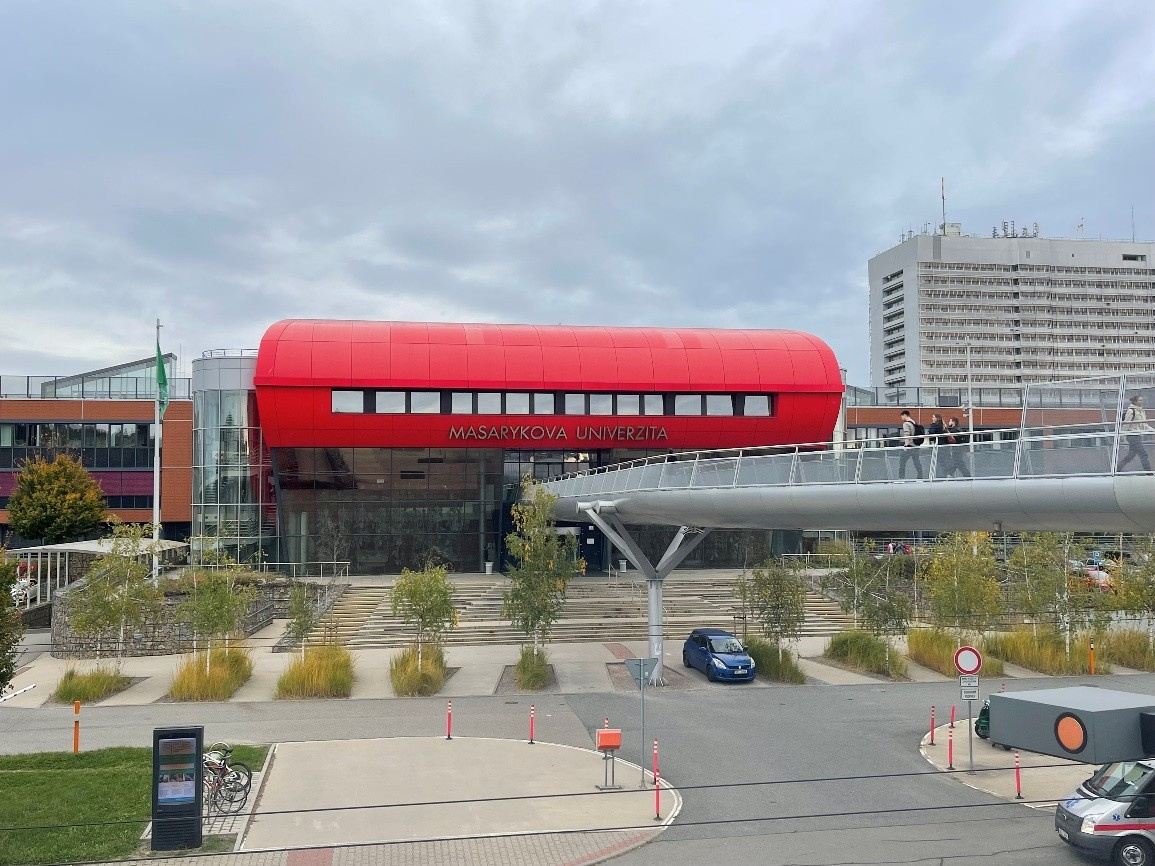
Two-Week Intensive Program in Loschmidt Laboratories: Advanced Training in ultrasensitive fluorescence HOX methodology
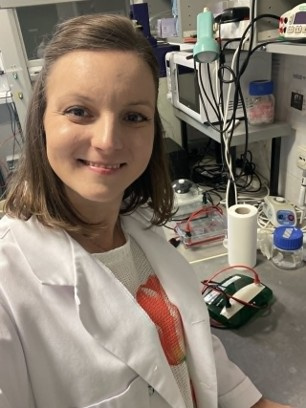
From October 6 to 17, RNDr. Ivana Timková, PhD. participated in an internship aimed at acquiring proficiency in a novel technique intended for future implementation in our laboratory. The HOX assay represents an ultrasensitive fluorescent method developed to detect halides and enzymatic dehalogenation. In this assay, halides are oxidized by vanadium-dependent chloroperoxidase derived from Curvularia inaequalis, resulting in the formation of hypohalous acids. These reaction products are subsequently detected utilizing aminophenyl fluorescein.
Compared to currently available alternatives, this technique demonstrates sensitivity enhancement by up to three orders of magnitude and is capable of detecting bromide ions at concentrations below one picomole. Under the expert supervision of Dr. Kovař, Dr. Timková received training in the production of VCPO peroxidase as well as in the precise execution of the HOX assay. A major component of the internship involved the optimization of measurement conditions specifically adapted to the characteristics of her dehalogenases.
Funded by the EU NextGenerationEU through the Recovery and Resilience Plan for Slovakia under the project No. 09I03-03-V04-00112 and 09I02-03-V01-00021.