Successful Completion of the ExCasProt Project
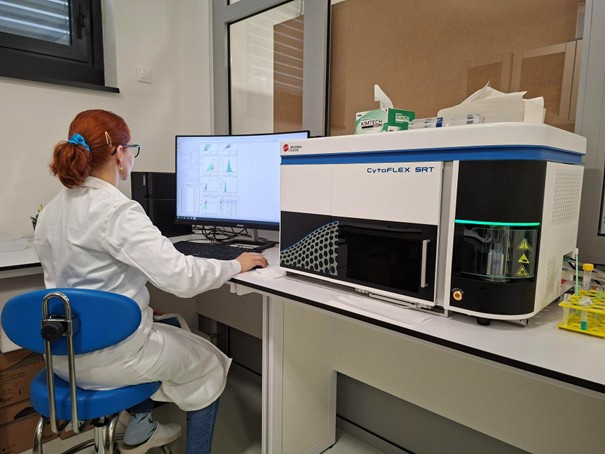
In June 2026, the activities of the ExCasProt – Supporting the Development of Protein Biotechnology Research in Eastern Slovakia project (No. 09I01-03-V04-00041) were successfully completed. The project encompassed research and publication activities, the dissemination and popularisation of scientific findings, and the development of international cooperation.
Building on the achievements of the successful CasProt project, ExCasProt further strengthened the research capacities of Pavol Jozef Šafárik University in Košice. Through collaboration with leading international research institutions, the project generated new scientific knowledge and high-quality research publications while also supporting early-career researchers.
The project was funded under the Recovery and Resilience Plan of the Slovak Republic (EU NextGenerationEU) through the call Matching Grants for Funding Secured from the Horizon 2020 and Horizon Europe Programmes.
Key Results and Scientific Contributions
The project generated significant new insights in the fields of protein engineering and directed protein evolution, as well as in the application of novel methods for studying biomolecules. The findings were published in prestigious international scientific journals:
Scientific Publications Produced with the Support of the Project:
- Štulajterová, M., et al. (2025): Assessing the impact of His-tags on activity and stability of staphylokinase variants. International Journal of Biological Macromolecules.
- Nemergut, M., et al. (2026): Concentration-dependent dimerization of staphylokinase variants with engineered surface charges. Protein Science.
- Tomková, M., et al. (2026): Rapid screening of staphylokinase protein variants using an unpurified cell-free expression system. FEBS Open Bio.
- Tomková, M., Mirossay, A., & Sedlák, E. (2026): Directed evolution of enzymes at the crossroads of tradition and innovation. FEBS Open Bio.
- Pápayová, K., & Žoldák, G. (2026): Laser optical tweezers for studies of biomolecules in the post-reductionist era. npj Biological Physics and Mechanics.
- Tomková, M., Capko, K., & Sedlák, E. (2025): Directed evolution of the human kappa opioid receptor for enhanced solubility. European Biophysics Journal.
- Leksa, V., et al. (2026): Rather a Versatile Multi-tool than a Sword: An Integral Role of the Plasminogen System in Health and Disease. Frontiers in Immunology.
Dissemination and Science Outreach Activities
The project results were presented not only to the scientific community at international conferences, but also to students and the general public.
Conference Contributions:
- EBSA Congress 2025 (Rome, Italy): Poster presentation entitled Directed Evolution of the Human Kappa Opioid Receptor for Enhanced Solubility.
- COZYME Working Group Meeting 2026 (Belgrade, Serbia): Poster presentation entitled Yeast Surface Display of the Human Kappa Opioid Receptor to Enhance Solubility.
Popular Science Articles and Book Chapters:
- Tomková, M. (2026): Strengthening Protein Biotechnology Research at UPJŠ [in Slovak]. Universitas Šafarikiana, 52(4), 22–23.
- Tomková, M. (2025): Directed Evolution as a Tool for Developing Novel Molecules for Medicine and Industry [in Slovak].
Public Engagement and Educational Events:
The project was also actively presented at public engagement and educational events through information stands, lectures, and practical demonstrations:
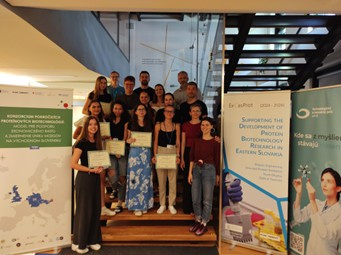
- Summer School of Protein Engineering (September 2025): An educational event aimed at students and early-career researchers, designed to develop their practical laboratory skills.
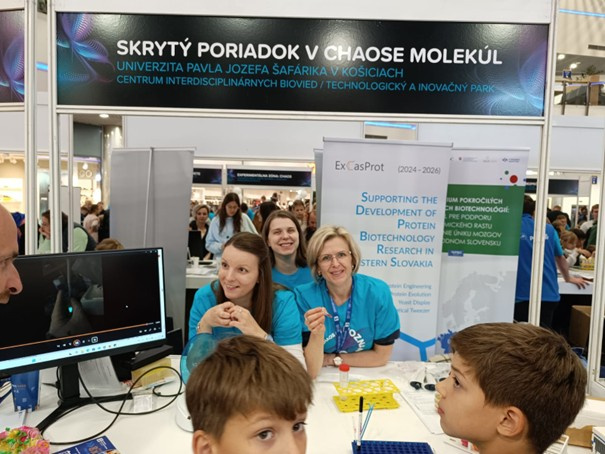
- European Researchers’ Night 2025: A presentation entitled “The Hidden Order in Molecular Chaos” for the general public and young audiences.
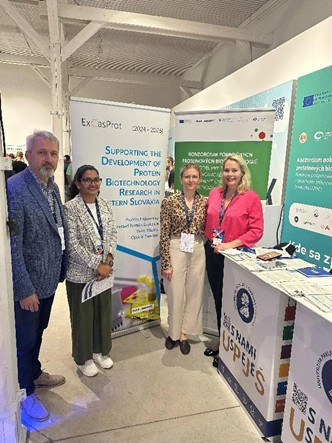
- SlovakiaTech 2025: Presentation of biotechnology research as part of the innovation and technology expo.
We would like to thank the entire research team, our partners, and all participants for their excellent work and support, which enabled the ExCasProt project to successfully achieve its objectives and establish a strong foundation for future innovative research at our institution.